
What waiting one more season actually costs
Every fall, somebody in the house says "it's fine, it'll make it through winter" about a garage door that's already groaning, sagging, or sticking halfway up. Here's what that bet actually costs: a spring that snaps in January doesn't just need a part, it usually needs an emergency call, because a broken spring means the door won't open at all and your car is stuck inside during the coldest week of the year. An opener that's been struggling all summer tends to finally quit the day it's 20 degrees out and you're late for work. Ignoring small symptoms now almost always turns a $150-$350 repair into a same-day emergency bill. So before you two argue about it again, here's the actual, boring truth about how long this stuff lasts.
The honest lifespan numbers
- Garage door (the panels themselves): 15-30 years, depending on material and how well it's been maintained. Steel doors on the higher end if they're not rusting; wood doors can go either way depending on moisture exposure.
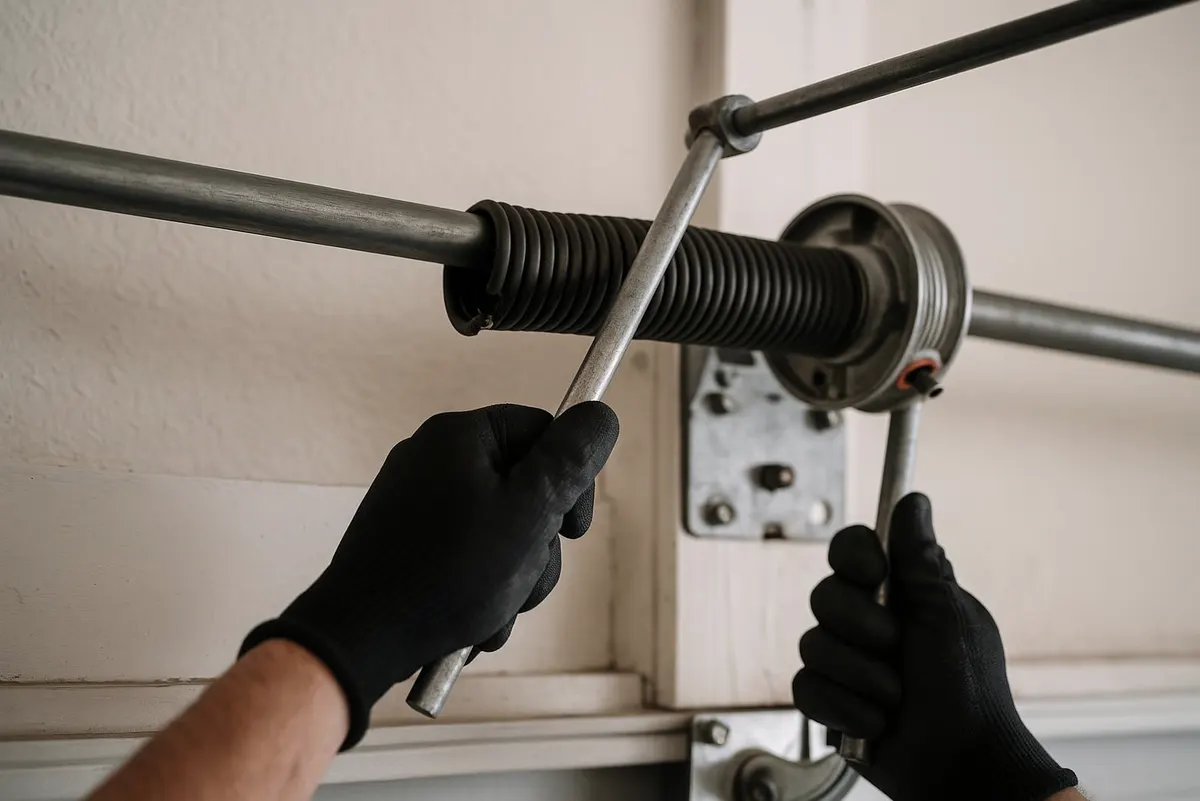
- Torsion springs: rated for about 10,000 cycles, which usually works out to 7-10 years of normal use (one cycle = opening and closing once). Run the door more than average and you'll hit that number sooner.
- Garage door opener: typically 10-15 years before the motor, gears, or electronics start failing for good.
So if your door is original to a house built in the 90s, it's not aged poorly, it's just old. And if the spring is already 8 years in, that's not pessimism, that's math.
What's actually shortening the lifespan around here
Newark's climate is genuinely rough on garage doors, and it's not the same stress everywhere. A few specifics:
- Humid summers push moisture into tracks, hinges, and rollers, washing out lubricant faster than you'd expect and accelerating rust on steel hardware and springs.
- Icy winters make metal contract, which stiffens springs and tightens tolerances on tracks, so a door that was merely noisy in August can start binding or jumping the track in January.
- Heavy rain and the occasional coastal storm drive water under weatherstripping and bottom seals, especially on older doors where the seal has hardened and cracked. That water intrusion warps wood panels and rusts steel ones from the bottom up.
- The mix of older and newer housing matters too. A lot of older homes in the area still have original torsion springs sized for lighter, older doors, or openers from before modern safety sensors were standard. Those systems aren't necessarily broken, but they're working harder than a correctly matched modern setup, which shortens everything's life.
What actually extends it
None of this requires anything exotic:
- Lubricate rollers, hinges, and the torsion spring itself twice a year with a garage-door-specific lubricant, not WD-40, which attracts grit.
- Check the balance: disconnect the opener, lift the door halfway by hand, and let go. It should stay put. If it drops or shoots up, the springs are compensating poorly and wearing out faster.
- Replace worn bottom weatherstripping before winter so rain and cold air aren't getting pulled into the opener mechanism and the garage interior.
- Tighten loose hardware twice a year, vibration from regular use works bolts loose over time, and loose track brackets let the door run misaligned, which chews up rollers.
- If the opener doesn't have battery backup, consider adding it; power blips during storms are common, and losing opener power with no manual release practice can leave you stuck.
Symptoms that mean it's time, not just time to argue
- The door is noticeably heavier or lighter to lift by hand than it used to be (spring fatigue)
- Grinding, popping, or a loud bang from the spring area
- The opener runs but the door lags, reverses randomly, or needs multiple button presses
- Visible rust at the bottom panel or flaking paint near the seams
- Daylight visible around the edges when the door is closed
When to call Newark Garage Door Pro
If you're hearing grinding or the door feels off-balance, that's a garage door maintenance visit, not a guessing game, we check spring tension, track alignment, and hardware before something fails outright. If a spring has already gone or the door won't move, that's spring replacement, done safely with the right size spring for your actual door weight, not a generic swap. Either way, we show up on time and tell you straight whether it's a repair or genuinely time to replace.
If your garage door or opener is giving you trouble anywhere in Newark, DE or the surrounding area, call Newark Garage Door Pro before winter makes the decision for you.