
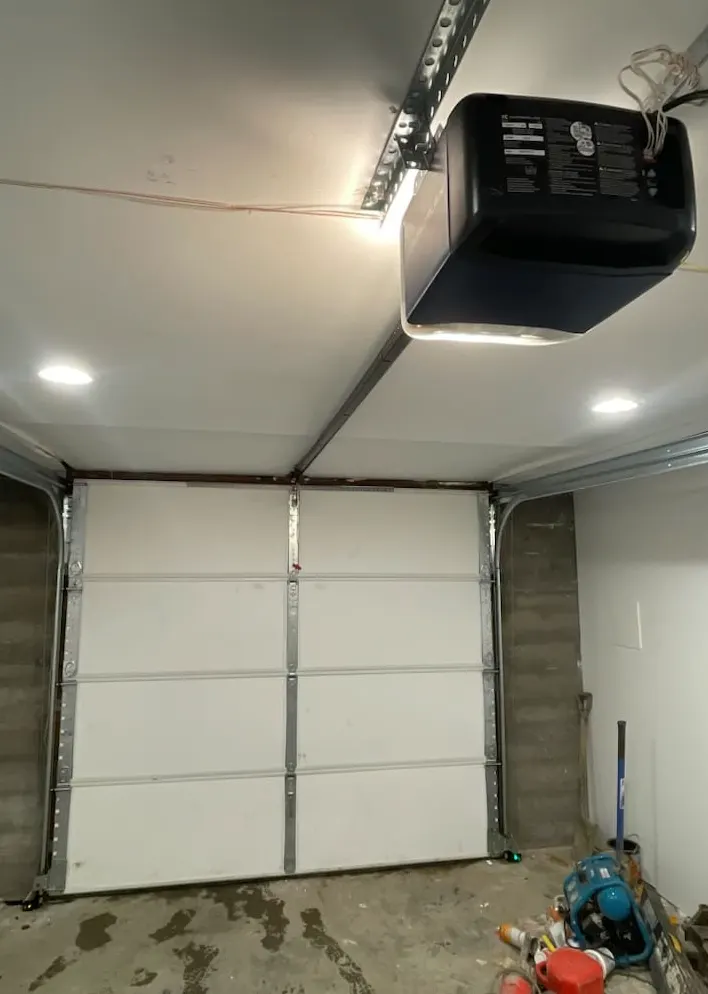
The Mistake Most People Make First
The second a garage door opener starts clanking, banging, or screeching, most homeowners reach for the nearest can of WD-40 and spray it on everything that moves. It's an understandable instinct — it's cheap, it's fast, and for a minute or two the noise actually seems to quiet down. The problem is that WD-40 is a solvent, not a lubricant. It breaks up grime temporarily, then evaporates and leaves the metal drier than before, which attracts dust and grit and often makes the grinding worse within a few weeks. The other common mistake is assuming a loud opener means you need a whole new unit. Most noisy openers are suffering from loose hardware, worn rollers, or a chain that's vibrating against bare metal — all fixable without replacing anything.
Step 1: Figure Out What Kind of Noise You're Actually Hearing
Before touching a wrench, spend a full open-and-close cycle just listening.
- Rattling or banging usually means loose bolts, brackets, or hinges.
- Grinding or squealing points to dry rollers, hinges, or worn bearings.
- A loud clank at one specific point in the door's travel often means a damaged roller or a bent track section.
- A metallic popping sound from overhead can mean the chain is loose or slapping against the rail.
This matters because in our climate, winter cold contracts metal and can loosen hardware that was snug in the summer heat, while humid summers swell wood doors and gum up tracks with moisture and pollen. Knowing which noise you have tells you which fix actually applies.
Step 2: Tighten Everything (Homeowner Job)
Tools needed: socket wrench set, screwdriver, step ladder.
- With the door closed and opener unplugged, go over every bolt on the track brackets, the hinges between door panels, and the opener's mounting bracket on the ceiling.
- Snug anything loose — don't overtighten brackets that are meant to flex slightly.
- Check the opener's mounting rail where it attaches to the header above the door; this bracket takes a lot of vibration and is a common culprit in older homes with original hardware.
Step 3: Lubricate the Right Parts with the Right Product
Tools needed: white lithium grease or a garage-door-specific lubricant (not WD-40, not motor oil).
- Apply grease to the hinges, rollers (if they're metal), the torsion spring, and the opener's drive screw or chain.
- Wipe off excess so it doesn't drip onto the floor or attract dust.
- Do this every six months — once before the humid season and once before winter — and most hardware stays quiet year-round.
Step 4: Replace Worn or Steel Rollers (Homeowner Job, With Care)
Tools needed: socket wrench, pliers, replacement nylon rollers.
Steel rollers are loud by design — metal on metal, every time the door moves. Swapping them for nylon rollers with sealed bearings cuts noise dramatically and doesn't require touching the springs. Replace one roller at a time, working from the bottom bracket up, and never remove the rollers nearest the bottom corners if they're attached to cables under tension — leave those to a technician.
Step 5: Isolate the Opener Itself
Tools needed: rubber anti-vibration isolator kit (sold for garage openers), socket wrench.
A lot of the noise people hear isn't the door — it's the opener motor transmitting vibration through its metal mounting bracket into the ceiling joists, which act like a drum. Rubber isolator blocks between the opener and the bracket absorb that vibration. This is a straightforward swap that takes most homeowners under twenty minutes and often makes the biggest audible difference of any step on this list.
Step 6: Consider a Belt-Drive Swap
If you've done all of the above and the opener is still loud, the drive mechanism itself may be the problem. Chain-drive openers are inherently noisier than belt-drive models, which use a reinforced rubber belt instead of a metal chain. Belt drives run noticeably quieter and hold up well through humid summers and icy winters alike, since there's less metal expanding and contracting. However, swapping to a belt-drive opener means replacing the entire unit — rail, motor, and wiring — which involves electrical connections, safety sensor alignment, and force calibration. This is where it crosses from a weekend project into a technician job.
When to Call Newark Garage Door Pro
If you've tightened hardware, lubricated properly, replaced rollers, and added isolators and the door is still loud — or if the noise is coming from the springs, cables, or track alignment — it's time to bring in a technician. Our Garage Door Opener Repair & Installation service covers everything from diagnosing stubborn motor noise to a full belt-drive upgrade done safely, including proper calibration for New Castle County's weather swings. We also offer Garage Door Maintenance visits that catch loose hardware and worn rollers before they turn into a 2 a.m. racket.
If your opener in Newark, Bear, Hockessin, or anywhere nearby is driving you up the wall, give Newark Garage Door Pro a call — we'll quiet it down and make sure it stays that way through the winter.