
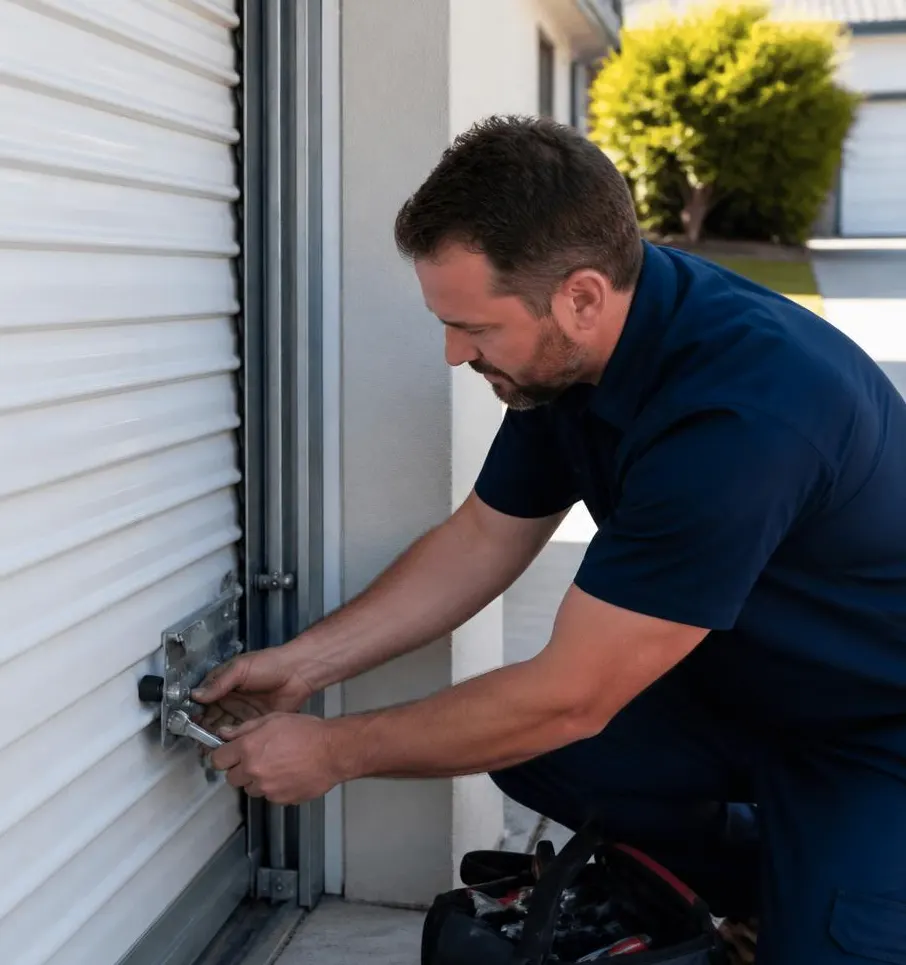
What a Technician Sees on a Typical Winter Call Here
The call usually comes in the same way: someone hits the opener button on a cold morning, the door shudders, rises an inch or two, and stops. Or it doesn't move at all. On arrival, the technician often finds a thin sheet of ice gluing the bottom weatherstrip to the concrete slab, left over from the previous day's rain or snowmelt that refroze overnight. This is especially common in Newark and the surrounding New Castle County area, where heavy rain and quick temperature swings mean driveways and garage floors stay damp right up until a hard freeze sets in. The homeowner has usually already tried the opener two or three times, which is the first thing a technician asks about, because repeated attempts on a frozen door are what strain the motor, gears, or belt.
Symptoms Worth Paying Attention To
- The door won't lift at all, and the opener motor hums or clicks without movement.
- The door rises a few inches then stops, sometimes reversing back down on its own.
- A visible ice line where the rubber seal meets the garage floor, often with a faint cracking sound if someone tries to force it open.
- The opener light blinks or the unit displays an error after a failed attempt.
- The door feels unusually heavy when lifted manually, compared to how it felt in warmer months.
- Grinding or stiff movement along the tracks, rather than a smooth glide.
Causes, in the Order a Technician Checks Them
1. An Ice Bridge at the Bottom Seal
This is checked first because it's the most common and the easiest to make worse. Water that seeped under the door during rain can freeze overnight, sealing the rubber astragal to the slab. The fix is never to force the opener or pry with a tool, both of which can tear the seal or bend the bottom panel. Instead, a technician will use gentle heat (a hair dryer or heat gun) or warm water with a bit of ice melt along the seam to loosen the bond before attempting to lift the door.
2. Thickened Lubricant on Rollers, Hinges, and Tracks
Standard grease and old lubricant residue stiffen in cold weather, adding drag right where the door needs to move freely. The fix involves wiping down the rollers, hinge pins, and track surfaces, then applying a garage-door-specific silicone-based lubricant that stays flexible in freezing temperatures, rather than a household oil that gums up over time.
3. Reduced Spring Tension in Cold Weather
Torsion and extension springs lose a bit of lift force as metal contracts in the cold, which is why a door that felt balanced in October can suddenly feel heavy in December. If the door is hard to lift by hand even after the ice and lubrication issues are resolved, the technician checks spring tension and may recommend an adjustment or, if the springs are already near the end of their cycle life, a full spring replacement rather than a temporary fix.
4. Opener Force Settings and Gear Wear
Cold weather also affects belt and chain tension and can make plastic gears inside the opener more brittle. A technician checks the force and limit settings, since a door that's suddenly heavier from reduced spring tension may trip the opener's safety reversal. Worn sprockets or gears are inspected here too, since they're a common point of failure that cold weather simply exposes sooner.
5. Brittle or Cracked Weatherstripping
Rubber seals naturally harden with age, and freezing temperatures accelerate cracking. A seal that's already compromised won't release cleanly from the slab even after the ice melts, and it will keep letting in cold air and moisture. Replacement is straightforward and often paired with the other fixes above.
6. Track Alignment and Roller Condition
Condensation inside the tracks can freeze and cause binding, particularly in older garages without much insulation. The technician checks for alignment issues and inspects rollers for flat spots or wear, since a misaligned track combined with winter stiffness is often what turns a minor slowdown into a door that won't move at all.
Older Garages vs. Newer Builds
Newark's mix of older and newer housing matters here. Older garages with less insulation and more gaps around the door tend to collect condensation and see more ice-related sticking. Newer, tighter construction cuts down on that but can trap humidity if ventilation is poor, so neither type of home is immune once winter sets in.
When to Call Newark Garage Door Pro
If the door freezes to the ground repeatedly, feels noticeably heavier than it used to, or the opener is straining and reversing, it's time to call. We handle everything from a seasonal Garage Door Maintenance tune-up that cleans and re-lubricates the moving parts before winter fully sets in, to Spring Replacement when tension loss turns out to be the real culprit. For a door that's frozen shut right now, our Emergency Garage Door Service gets a technician out safely without you risking damage trying to force it open yourself.
If your garage door is sticking, groaning, or refusing to budge this winter, call Newark Garage Door Pro today and let a local technician get it moving safely before the next freeze.